~15%Average body weight lost (68 weeks)
83%Patients achieving ≥5% weight loss
$139Starting monthly price (12-month plan)
What Is Compounded Semaglutide?
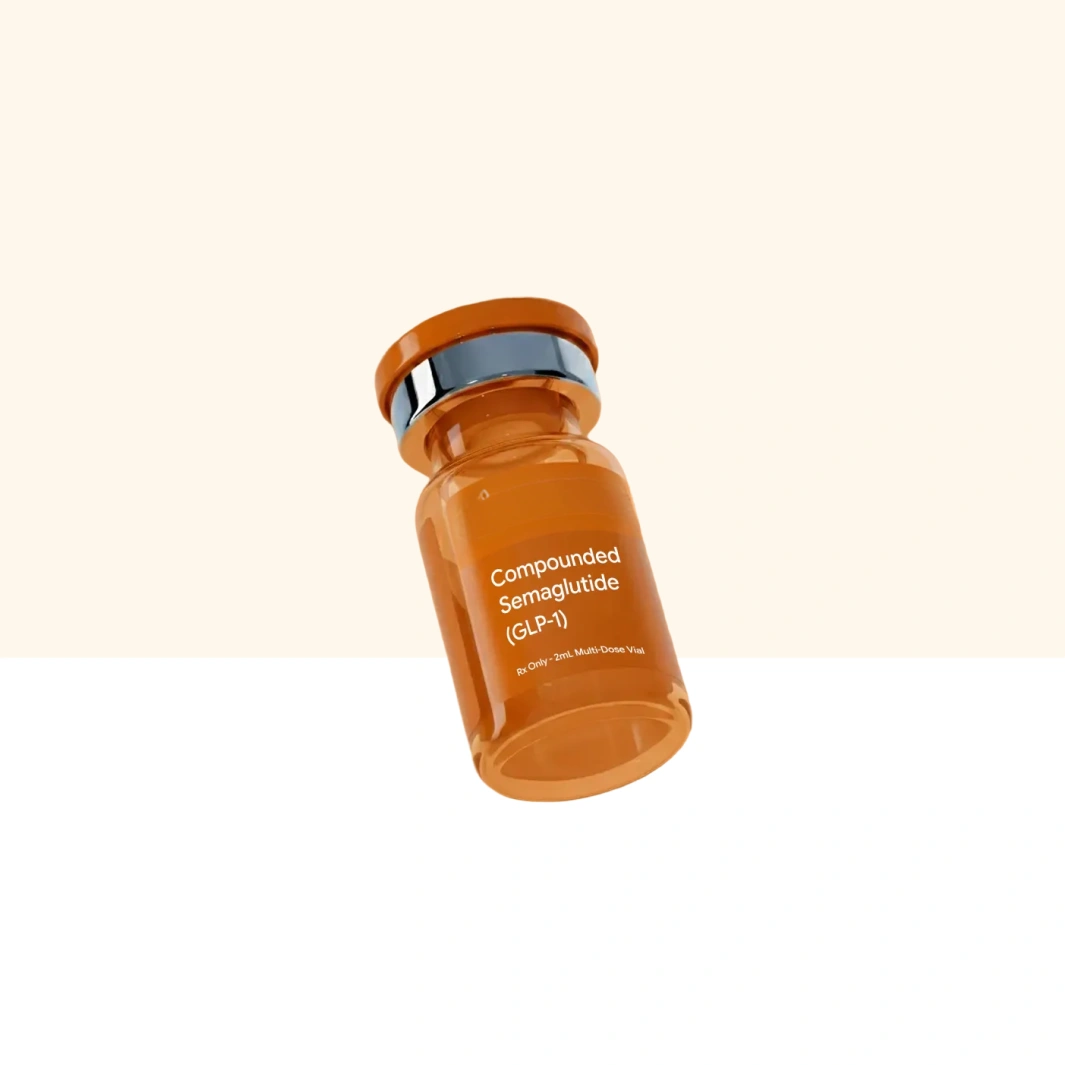
Compounded semaglutide is a GLP-1 receptor agonist medication produced by licensed compounding pharmacies. It contains the same active ingredient as the brand-name medications Ozempic (approved for type 2 diabetes) and Wegovy (approved for chronic weight management) — but is manufactured by a compounding pharmacy rather than Novo Nordisk, the original brand-name manufacturer.
GLP-1 stands for glucagon-like peptide-1, a hormone your body naturally produces in the gut after eating. Its primary role is to signal fullness to the brain, slow gastric emptying so food stays in your stomach longer, and — in people with metabolic conditions — regulate blood sugar. Semaglutide works by binding to GLP-1 receptors and dramatically amplifying these effects, producing a significant and sustained reduction in appetite for most patients.
The practical result for most people: the constant mental background noise around food — what researchers call "food noise" — significantly quiets or disappears entirely. Eating less stops feeling like willpower and starts feeling natural.
Clinical note: In the landmark STEP-1 clinical trial, participants on weekly semaglutide 2.4mg lost an average of approximately 14.9% of their body weight over 68 weeks — more than any prior weight-loss medication class had achieved at scale.
Compounded vs. Brand-Name Semaglutide
Understanding the difference between compounded and brand-name semaglutide is important before starting any program. They share the same active ingredient — semaglutide — but they differ in several meaningful ways.
Brand-name Ozempic and Wegovy are manufactured by Novo Nordisk and go through the FDA's full new drug application (NDA) approval process, which includes extensive clinical trials, manufacturing inspections, and ongoing post-market surveillance. They are FDA-approved products.
Compounded semaglutide is produced by licensed compounding pharmacies during ongoing drug shortages, under FDA authorization. The pharmacies themselves are regulated — they must follow current Good Manufacturing Practice (cGMP) standards and operate under state pharmacy board oversight — but the compounded product is not individually FDA-approved in the same way brand-name drugs are.
The practical implication: compounded semaglutide offers the same mechanism and very similar outcomes at a dramatically lower price point, but with a different regulatory history. For most patients working with a legitimate telehealth provider and FDA-registered pharmacy, this trade-off is acceptable. Patients who require the specific brand-name product for insurance, prior authorization, or other clinical reasons should work with a provider who offers brand-name prescribing.
Disclaimer: Compounded medications are not FDA-approved brand-name products. This information is educational, not medical advice. Consult your provider.
Semaglutide Dosing and Administration
Injectable Semaglutide
Injectable compounded semaglutide is administered as a subcutaneous (under the skin) injection once per week. Common injection sites include the abdomen, upper thigh, or outer upper arm. A fine 4mm–6mm needle is used; most patients describe the injection as minimally uncomfortable. Injections are self-administered at home following your provider's instructions.
Dosing is typically titrated — starting at a low dose and increasing gradually over several weeks to reduce gastrointestinal side effects. Your LevelsRX provider sets your starting dose and escalation schedule based on your health profile.
Oral Semaglutide
LevelsRX also offers oral compounded semaglutide — a significant differentiator from most competitors. Oral semaglutide is taken as a tablet or sublingual preparation, making it an option for patients who prefer to avoid injections entirely. Discuss the oral format with your provider to determine whether it's appropriate for your situation.
- Take oral semaglutide on an empty stomach, at least 30 minutes before food or other medications
- Swallow with a small amount of plain water only
- Follow your provider's prescribed dose — do not self-adjust
Common Side Effects
GLP-1 medications affect the gut and brain, and side effects are most common during the initial dose-titration period. The most frequently reported side effects include:
- Nausea — the most common side effect, especially in weeks 1–8. Typically diminishes significantly as your body adjusts.
- Constipation — caused by reduced gastric motility. Staying hydrated (64+ oz water daily) and maintaining fiber intake helps significantly.
- Fatigue — often related to reduced caloric intake rather than the medication directly.
- Vomiting or diarrhea — less common; more likely with rapid dose escalation.
- Injection site reactions — mild redness or bruising at the injection site, usually transient.
More serious adverse events are rare but include pancreatitis and gallbladder disease. Semaglutide should not be used by individuals with a personal or family history of medullary thyroid carcinoma or Multiple Endocrine Neoplasia syndrome type 2 (MEN2). Your LevelsRX provider will review your health history for contraindications before prescribing.
Order Compounded Semaglutide
Get 50% off your first month — free shipping included. Choose your plan duration below.
✓ 180-Day Money-Back Guarantee · ✓ Free Shipping · ✓ HSA/FSA Eligible